Atlanta planting calendar
When to plant
Mid-August: save these seeds for late fall or winter sowing. Scatter them outdoors from November through January so cool, moist weather supplies about 30 days of natural cold stratification. For a spring start, give the seeds 30 days of cold, moist stratification in the refrigerator, then sow them in late winter or early spring. Do not bury them deeply; the tiny seeds germinate best at or very near the surface.
Research checked against UGA Extension’s fall pollinator guidance, UGA’s Southern herb guide, Iowa State’s perennial seed guide, and University of Maryland’s native-seed guide. Weather varies, so shift spring dates when frost arrives unusually early or late.
How to sow
Press the seeds onto moist seed-starting mix or prepared soil and cover only with the faintest dusting of soil. Fall or winter sowing is the simplest method. For spring planting, refrigerate the seeds for about 30 days in a barely moist medium first, then provide light and steady moisture until they germinate.
How to grow
Choose a sunny spot with ordinary, well-drained soil. Water young plants regularly while they establish, then let the surface dry a little between waterings. Deadheading encourages more flowers, while leaving a few mature seed heads feeds birds and may give you volunteers next year.
What to expect
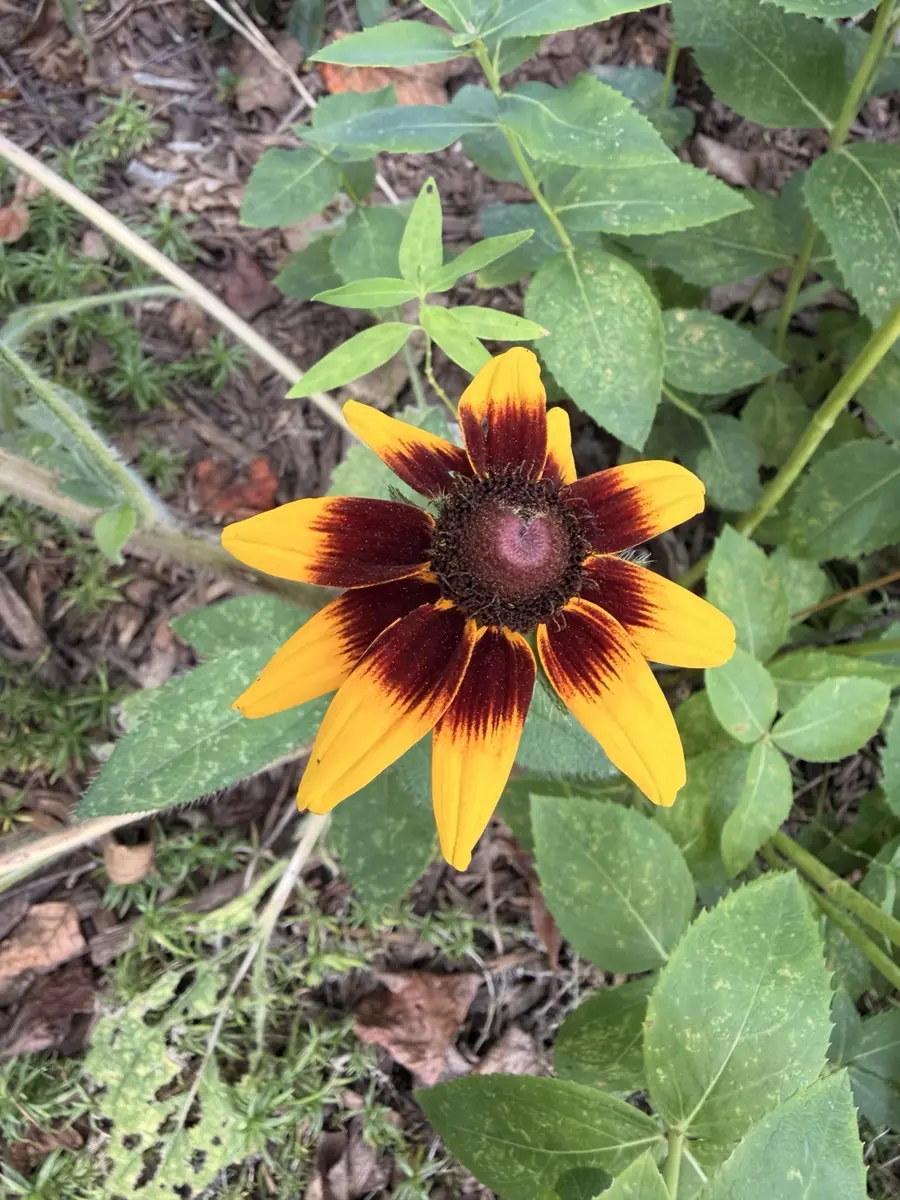
Rudbeckia hirta is often grown as an annual, biennial, or short-lived perennial. Plants commonly reach about 1–3 feet and bloom from summer into fall. Because these seeds were collected from an open-pollinated garden flower, the seedlings may not repeat this exact burgundy-and-gold pattern—and that surprise is part of the fun.
Seed-sharing note
These seeds came from plants growing in my garden. Seedlings are individuals, so they may not look exactly like the parent plant—and that is part of growing from seed.